
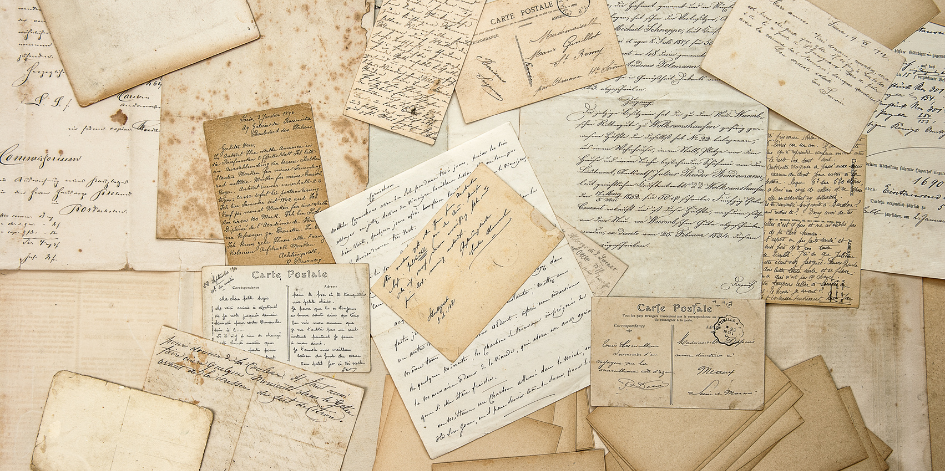
This month, I read The Correspondent by Virginia Evans, and it stuck with me.
It’s a story told through letters. Just an everyday back and forth between people, but over time, it builds a full picture of a life. It’s not a book I would have normally reached for, but I kept seeing it everywhere, so I finally gave the audiobook a try. I’m really glad I did.
The book brought to mind the pen-pal letters I wrote in elementary school and all the forbidden notes I passed back and forth in class, tucked into a shoebox that was eventually tossed when I moved to college. It made me realize how much letter writing has become a dying art, and how important preserving handwritten letters can be, even though it’s such a simple way to create something you can hold onto.
There’s something different about a handwritten letter. It feels more personal, more intimate, more intentional. It’s time someone chose to give, and over time, it becomes a small time capsule.
What My Mimi Chose to Keep
It also made me think about my Mimi.
She didn’t save everything. She was particular about what she preserved. But when it came to our family history, she held onto the things that told our story.
When she started tracing our family history, she wrote countless letters to relatives and saved every one. They ended up in 3-ring binders, lined up on the shelves in her laundry room. After she passed, those letters became something more. They became a tangible piece of our past that outlived her, and with intention, could outlive us as well.
My Uncle Bruce went through them and spent hours scanning each one. He saved them onto a small drive and sent me a copy a few years ago.
I remember sitting down and opening those files one by one.
It felt like I was reading her life. Suddenly, I could picture her scouring libraries for family history, then coming home and sitting at the kitchen table, the one with the white porcelain soup tureen in the center where we often sat during our visits, writing letter after letter to relatives as she slowly gathered pieces to our family’s story, like a puzzle coming together over time. There was something steady and patient about it, the kind of work you don’t rush.
It made me look at the letters I’ve saved differently. The handwritten notes from parents, the cards with heartfelt messages that came during a challenging time, the notes slipped to me by co-workers or friends for no reason at all. The ones written in handwriting I know right away.
I’ve saved them and meant to preserve them, but they still sit in a box.
We’re good at keeping things. We’re just not always sure what to do with them next.
Simple Ways to Care for the Letters You’ve Kept
If you have a stack like this tucked away somewhere, here’s a simple place to start when it comes to preserving handwritten letters and the stories they hold:
Gather them in one place.
It doesn’t have to be perfect. Just start a box, a drawer, or a small stack.
Add a little context.
If you know who wrote it or about when, jot it down. Even a few words can help someone else understand it later.
Safely store them.
A folder, envelope, or keepsake box works just fine. If you prefer, you can look for acid-free options, but simple is enough.
Make a copy.
You can scan them or take a photo with your phone. It doesn’t have to be fancy. My uncle proved that.
Use them in your space.
You don’t have to hide them away. Frame a note, place one under glass on a desk, or include it on a shelf. They can be part of your home.
Share one story.
You don’t have to go through everything. Just pick one letter and share it with someone.
Final Thoughts
Preserving these things takes a little intention. But it’s worth it.
One day, these won’t just be papers we saved.
They’ll be pieces of a life.
A life we’ll want to carry with us forever.
One Last Question:
If someone opened a box of your letters one day, what would they learn about your life?
