
We don’t always realize when we’ve stepped into the middle.
For me, it was a humid October day in East Tennessee. I pulled up in front of the one-level white ranch-style home my mother and stepfather had recently chosen, looking at the trees for the first hints of red and orange that promised cooler weather was finally on its way.
My parents were moving closer because their health was changing, and this house would make life a little easier for them. A few minutes later, I would walk through it with my mother, taking in some of the practical choices that come with getting older. Later that same afternoon, I would head home to help my daughter study for a math test.
Somewhere between those two responsibilities, the thought came: How did I get here so quickly?
I was still very much raising a child while beginning to step into a different role with my parents. This was the middle. Somewhere along the way, I had become a generation of my own, sandwiched between the one that raised me and the one I was still raising.
With this season comes another reality: at some point, many of us will find ourselves helping our parents make decisions about a lifetime of belongings. And with those decisions often come questions about what matters, what holds meaning, and what we want to carry forward. I’ve been thinking about this quite a bit lately, and it shows in my current reading list.
Here are a few books for the Sandwich Generation that I’ve recently read and enjoyed, each offering a different way to think about what we keep, what we let go of, and what we eventually leave behind.
Three Books for the Sandwich Generation:
Book 1: Keep the Memories, Lose the Stuff by Matt Paxton
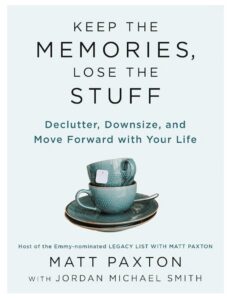
Keep the Memories, Lose the Stuff is a good place to start if you’ve ever looked around a parent’s home and wondered, What in the world are we eventually going to do with all of this? Paxton brings years of experience helping families sort through homes filled with a lifetime of belongings. I love how his approach offers practical ways to manage not only other people’s stuff when it feels overwhelming, but also the conversations that come with it.
What I loved most about this book is Paxton’s practical system for decluttering. As a featured cleaner on the television show Hoarders, he has certainly seen his fair share of clutter and understands how difficult it can be to decide what stays and what should go. He also offers helpful guidance on the best places to donate the items you are ready to release.
Throughout the book, he shares stories of past clients he has guided through this process, making his advice both practical and relatable. Gathering the meaning behind the items we keep has been a passion of mine for the past six years, so I appreciated his thoughtful approach to helping people make these decisions.
Book 2: The Gentle Art of Swedish Death Cleaning by Margareta Magnusson
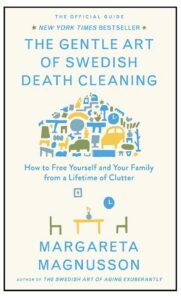
First, let’s acknowledge the title. It sounds much more depressing than the book actually is. This book is steeped in kindness and consideration. The premise is fairly simple: thoughtfully deal with your belongings over time so the people you love don’t eventually have to make every decision for you.
What surprises me about this book is how quickly it turns the conversation back toward us. It’s easy in this season to think about our parents’ houses, their closets, and all those boxes that haven’t been opened in years. But eventually, our children may stand in our homes doing the same thing.
I say it often, but clutter is not an heirloom, and this book makes me thoughtfully consider what I deem worthy of keeping. When we keep too much, it becomes harder to recognize the things that really deserve our attention, the stories that come with them, and perhaps a place in the next generation. It also raises some uncomfortable but useful questions: What am I keeping? Why am I keeping it? And if something really matters to me, will anyone else know why?
Book 3: Legacy Love Letters by Gwen Christeson
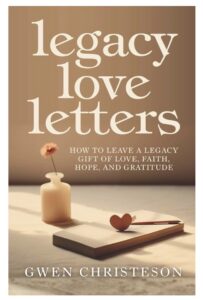
In Legacy Love Letters, probate attorney Gwen Christeson encourages readers to write letters for their loved ones to receive after their passing. Honestly, this was a new concept to me, but I loved it. The book is filled with ideas and journal prompts to help you begin writing these letters, including ways to document important family stories, share memories, and put into words the things you want the next generation to know.
But what I found especially meaningful is the idea that these letters can also become a source of comfort for the people we love as they walk through their grief. There are stories we want the next generation to know, words we want them to remember, and things we may not always think to say while we have the chance. This book offers a thoughtful way to begin writing them down.
What I love most about this idea is that we don’t have to wait until the end of our lives to begin. We can start documenting the stories, memories, and words we want our people to have now. I think there’s something really special about knowing that one day, our own words may bring comfort when we can no longer say them ourselves.
A Final Thought on What Stays
Each of these books offers something different to think about, but I keep returning to the idea that every heirloom holds a story and, more importantly, has a storyteller. Our job is to get the story before the storyteller is gone. Maybe it’s the story behind the serving platter your family passes around the Thanksgiving table every year, or the watch tucked into a drawer that hasn’t worked in forty years. Sometimes the story lives in something as simple as an old journal, passed down and kept because of the person and memories attached to it.
We often recognize that someone treasured an object without knowing why. Hearing the story can change the way we see that ordinary object altogether. We don’t need to keep everything, but we do have an opportunity to ask about the things that matter while the people who know their stories can still tell them.
And that may be what I appreciate most about these three books. None of them answers every question, but each one encourages us to think differently about what we keep, what we let go of, and what we want to leave behind. If you’re living in this season as well, each of these books may lend a helping hand.
